

- When “due process” sounds like damage control
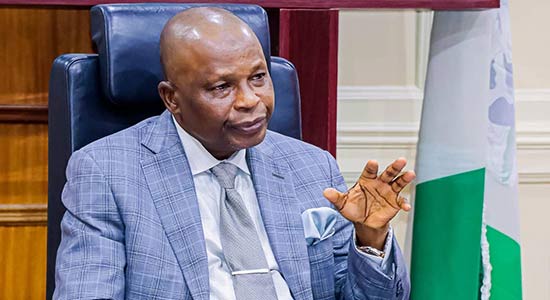
Attorney General and Minister of Justice, Lateef Fagbemi (SAN), may have intended to calm public unease. His recent clarification that no inmate has yet been released under President Tinubu’s exercise of the prerogative of mercy was supposed to assure Nigerians that the process is under control.
Instead, it revealed something more troubling. a crack at the core of Nigeria’s justice system, where legality is often an afterthought and political convenience the real law of the land.
In his statement, Fagbemi said the list of pardon beneficiaries was still undergoing final legal scrutiny after Council of State approval. But to many observers, that sounded like a confession that his office either failed to vet the list before it reached the President or was completely sidelined in the process.
“So, an Attorney-General cum Minister of Justice is admitting that he did not screen or vet the list for presidential pardons?” — Ebere Anosike (@NjaCoach)
A Blunder That Exposes a Bigger Problem
Public governance analyst Ebere Anosike, reacting sharply on X (formerly Twitter), described the episode as “a spectacular professional disaster.”
He warned that if the Attorney General’s office did not properly screen the list, dangerous offenders could be wrongfully released, putting victims and judicial officers at risk.
But beyond this immediate concern, Anosike zeroed in on the structural defect that keeps producing such blunders: the fusion of the Attorney General and Minister of Justice roles.
By law, Nigeria’s Attorney General is meant to defend justice. But in practice, he also serves as a cabinet minister, bound by political loyalty to the President. That dual identity makes true independence impossible.
“We need an AG of sound legal judgment — not a cabinet loyalist whose advice bends to politics.” — Ebere Anosike
Conflict of Interest at the Core of Justice
The result of this structural confusion is clear. The Attorney General, who should be the legal conscience of the nation, often becomes the political firewall of the Executive.
We see it when politically exposed persons like Yahaya Bello evade accountability.
We see it when the EFCC, ICPC, and Police act with selective urgency.
We even see it in the President’s refusal to sign National Assembly bills, citing “defects” that better legal advice might have prevented in the first place.
How can one office serve two masters, law and politics and still deliver justice?
Why Nigeria Must Split the Roles
In most democratic systems, the Minister of Justice handles policy and administration, while the Attorney General remains the independent guardian of legality, often with tenure and financial autonomy.
Nigeria must embrace this model. The Attorney General should be a non-partisan office, funded from the first line charge, just like the judiciary, and insulated from executive control.
Such reform would not only strengthen the rule of law but also restore public confidence in the justice system, a system that currently looks more loyal to power than to principle.
A Reform whose time has come
Lateef Fagbemi’s “clarification” may have been a simple update on paperwork, but it has ignited a much larger debate about the integrity of Nigeria’s legal framework.
The question is no longer whether pardons are delayed — it’s whether justice itself is still intact.
If President Tinubu is serious about reform, he must depoliticize justice by separating the two offices.
Only then can the Attorney General truly stand for the law, not for the powerful.
“The rule of law does not rush,” Fagbemi said.
True, but it should not stumble over its own politics either.
Banner Online News


